
Technology investments are made with the best intentions. Organizations invest in new tools to improve productivity, strengthen security, support growth, and help employees work more efficiently. But over time, new applications are introduced, cloud infrastructure expands, employee needs evolve, and licensing requirements change.
Eventually, many IT and business leaders find themselves asking: are we getting the full value from our technology investment?
That was the situation facing Givens Communities. Despite previous licensing reviews, the organization still lacked clear answers about its Microsoft environment and whether its technology investments were delivering the value expected.
Learn more about how Finchloom solved Givens Communities’ challenges.
Why Givens Communities Needed Greater Visibility Into Its Technology Investment
When Givens Communities, a North Carolina-based provider of senior living and affordable housing, brought IT management in-house in 2025, leadership saw an opportunity to take a closer look at its Microsoft environment and technology investments. The organization relied heavily on Microsoft to support approximately 900 employees and 1,400 to 1,500 resident homes, making visibility into costs, licensing, security, and infrastructure increasingly important.
Despite completing licensing reviews in the past, the team still lacked clear answers to some fundamental questions about its environment.
- Do employees have the right Microsoft licenses?
- Can costs be reduced without compromising security?
- Is Azure infrastructure configured appropriately?
- Are there security gaps that require attention?
- Which technology improvements should be prioritized first?
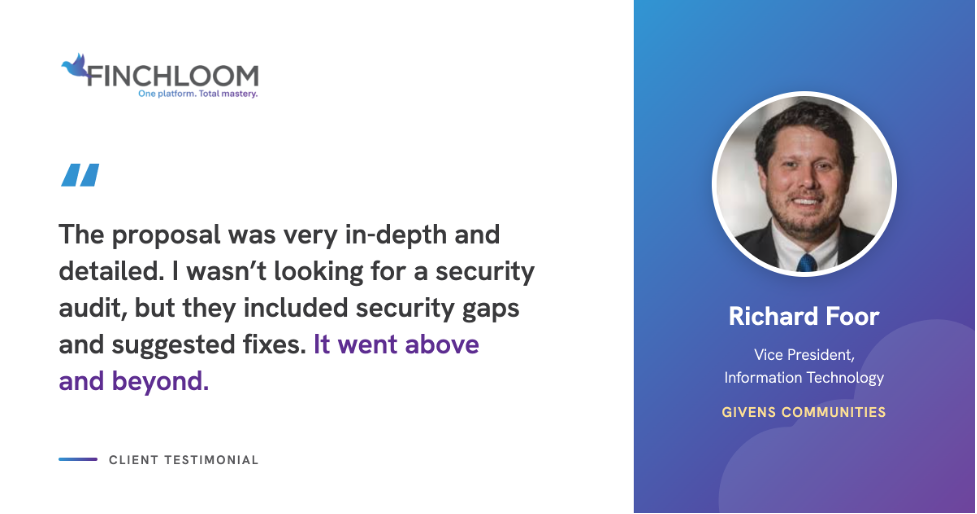
To gain that visibility, Givens Communities engaged Finchloom’s Reality Check: Microsoft 365 Licensing & Azure Consumption Assessment, a comprehensive review of Microsoft 365 licensing, Azure consumption, infrastructure, and security.
Why Many Organizations Struggle to Understand Their True IT Budget
Most organizations know what they spend on technology each year. Fewer know whether they are spending it effectively.
For busy IT teams, uncovering those insights internally can be difficult. Many turn to assessments like Finchloom’s when they need a clearer picture of how Microsoft licensing, Azure resources, security, and spending fit together.
An IT budget extends far beyond software subscriptions. It includes cloud infrastructure, cybersecurity investments, support services, consulting engagements, and the resources required to manage it all. Over time, these costs accumulate through dozens of individual decisions made to solve immediate challenges.
For example:
- New licenses are purchased as employees join the organization.
- Cloud resources are expanded to support new business initiatives.
- Security tools are added to address evolving threats and compliance requirements.
- New services are adopted to solve operational challenges or improve productivity.
- Existing technology investments are renewed year after year with limited review.
Even when leaders recognize the need for a review, uncovering the full picture can be incredibly time-consuming. The information needed to evaluate technology spending is often spread across multiple vendors, licensing portals, cloud platforms, contracts, invoices, and internal teams. Gathering data is only the first challenge. Understanding how those investments connect to business outcomes, security requirements, and day-to-day operations requires both time and specialized expertise.
For the already-busy IT team at Givens Communities, conducting that level of analysis internally would have required pulling resources away from strategic initiatives and operational support.
What Should Information Technology Audit Services Uncover?
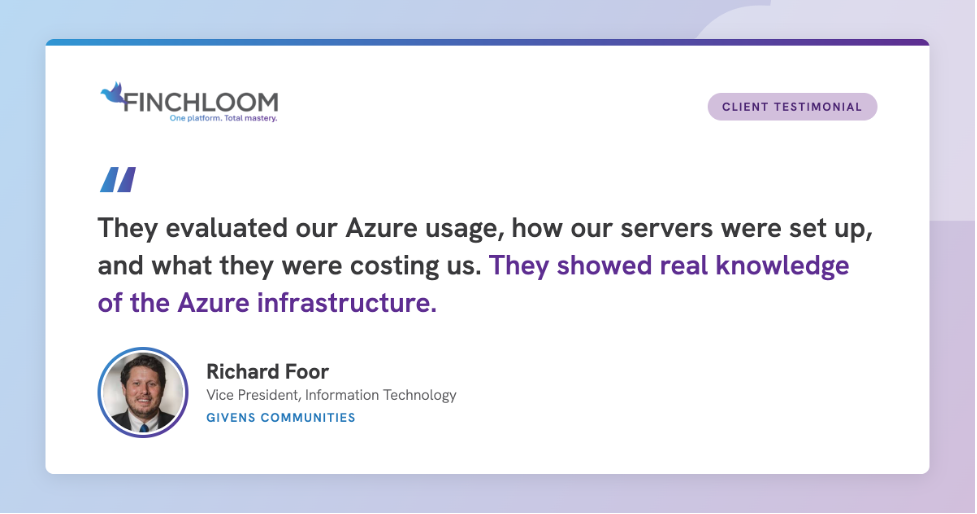
While cost optimization was one area of focus, the assessment ultimately provided Givens Communities with a broader understanding of its Microsoft environment. Rather than delivering a checklist of findings, Finchloom took the time to evaluate how technologies were supporting the organization today and where improvements could better support future needs.
Microsoft Licensing: Understand how people across the organization actually worked and whether their Microsoft licensing reflected those needs.
Azure Infrastructure: Reviewed how Azure resources were being used, whether the environment was configured appropriately, and how infrastructure decisions aligned with organizational needs and expectations.
Security Considerations: Analyzed the broader Microsoft environment to highlight potential risks and identify practical improvements that could strengthen the organization’s security posture.
Future Planning: Provide final recommendations designed to give leadership a clearer understanding of where to focus first and what tools could better support organizational goals.
What Givens Communities Learned from a Comprehensive Technology Review
By the conclusion of the assessment, Givens Communities had a clearer understanding of its Microsoft environment and a practical roadmap for improvement.
The review helped answer questions such as:
Are our Microsoft licenses aligned with how employees actually work?
Understanding how licensing decisions evolved gave Givens Communities a clearer view of where licenses aligned with employee needs, where adjustments made sense, and how to maintain the security capabilities the organization relied on.
Are we getting the value we expected from our Microsoft investments?
Looking at a more complete picture of how Microsoft 365, Azure, and other investments were supporting day-to-day operations helped Givens Communities better understand where resources could be optimized and how spending aligned with business needs.
Is our Azure environment supporting the business as effectively as it should?
Examining Azure infrastructure through the lens of operational needs, resiliency requirements, and long-term objectives helped Givens Communities determine whether its environment was configured to support the organization today while identifying areas to strengthen in the future.
Are there risks or security gaps we haven’t uncovered?
Taking a bird’s eye view at the Microsoft environment revealed security considerations that may not have surfaced through a licensing review alone. These findings provided additional visibility into potential risks and recommendations to improve overall security posture.
What technology improvements should be prioritized first?
Bringing licensing, infrastructure, security, and operational findings together created a clearer picture of where attention should be focused. With a more complete understanding of the environment, Givens Communities was able to rank which opportunities deserved immediate attention.
Rather than focusing on a single issue, the Givens Communities gained a broader view of how its technology investments supported business operations and where improvements would have the greatest impact.
Perhaps most importantly, the team found a partner capable of helping them navigate future technology decisions as needs evolve.
Are You Getting the Full Value of Your Technology Investment?
Many organizations like Givens Communities need better visibility into the technology they already have. Understanding where your technology environment stands today is often the first step toward improving both performance and ROI.
If you’re unsure whether your Microsoft environment is aligned with your organization’s needs, Finchloom’s Reality Check: Microsoft 365 Licensing & Azure Consumption Assessment can provide the clarity needed to move forward with confidence.
By evaluating Microsoft 365 licensing, Azure consumption, infrastructure, and security, Finchloom helps organizations identify opportunities, prioritize improvements, and maximize the value of their Microsoft investments. Whether you’re looking to optimize your IT budget, improve ROI, or simply gain a clearer picture of your environment, a closer look today can help you make better technology decisions tomorrow.